
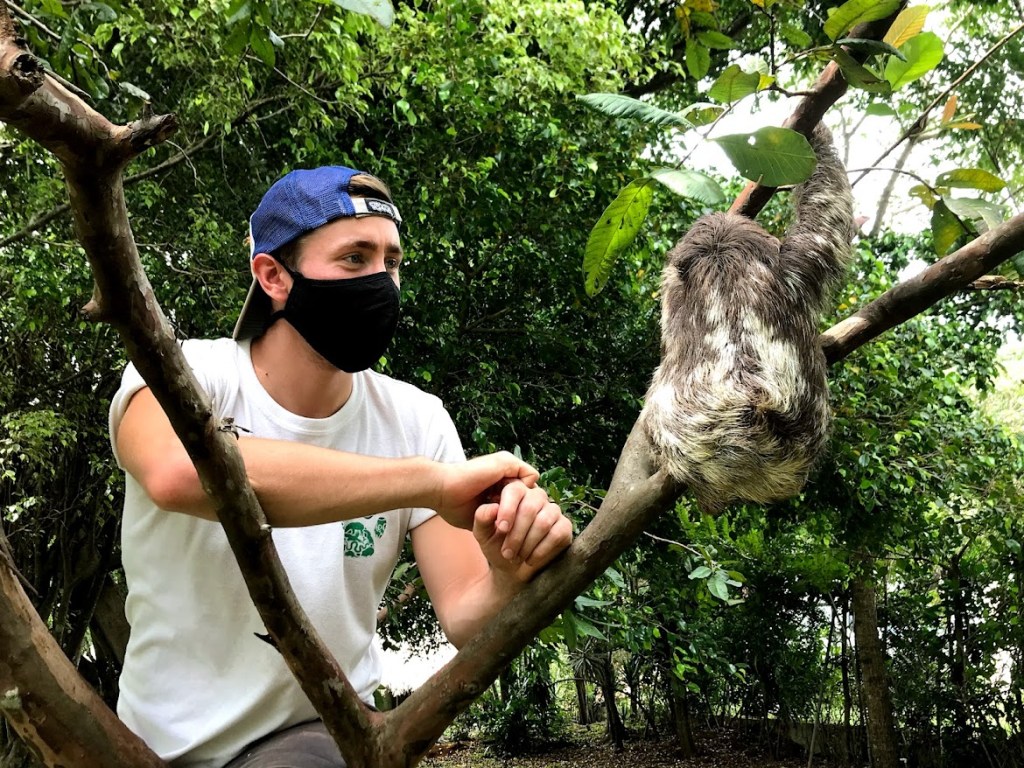
Thinking of travelling to Costa Rica?
With lush rainforests, volcanic landscapes, stunning coastlines, and an abundance of wildlife, this Central American gem offers something for every kind of traveller.
But before you zip-line through the jungle or sip coffee on a cloud forest terrace, there are a few essential things you should know to make the most of your journey.
From local customs and currency tips to road conditions and safety advice, this guide will help you prepare smartly and travel with confidence.
Here are 16 important things to know before visiting Costa Rica – so you can focus on the “Pura Vida” and leave the stress behind.
Costa Rica is not cheap
Possibly the biggest misconception: Central America equals cheap travel.
Not always.
Whilst that may hold true for some countries in the region, Costa Rica is a different story.
Owing to high import taxes, extirpation, and challenges with local agriculture, cost of travel here can be surprisingly expensive to many visitors.
Tours often exceed $150 USD per person and dining out is comparable to prices in the U.K. And the fuel and care hire? Don’t even get me started.
At first glance, planning your own trip might seem like a more budget-friendly option than working with a travel agency, such as Cecropia Travel.
However, without insider knowledge or a well-thought-out itinerary, it’s easy to burn through your budget much faster than expected.
That’s where we come in. At Cecropia Travel, our knowledgeable staff and trusted partners will always ensure you have the most cost-effective trip, without compromising on comfortability or excitement.

Travelling around Costa Rica takes time
Costa Rica may be similar in size to Denmark, which makes it tempting to think you can see the whole country in one trip.
Technically, you can – but it won’t be enjoyable, and you definitely won’t experience the best of what Costa Rica has to offer.
And there’s a few good reasons for this.
First, not all roads are in great condition. Between potholes and rough terrain, driving can be slow and frustrating – though if you’re used to British roads, this might feel oddly familiar!
Then there’s the geography. The sheer abundance of National Parks and wildlife reserves means trips are never as the crow flies. In addition, Costa Rica is full of winding, mountainous routes, further increasing journey times.
Even on highways, the speed limit averages just 50 mph. And when you factor in traffic, single-lane roads, and the occasional slow-moving lorry, travel times can easily double.
We’re still regularly caught off guard ourselves – what looks like a two-hour drive on the map can quickly become four or more!
Holidays should be relaxing, not stressful. To help you make the most of your time in Costa Rica, check out our sample itineraries. They’re carefully curated to balance adventure, downtime, and efficient travel across Costa Rica.
Tap water is safe to drink in Costa Rica
In many parts of Costa Rica, particularly in the Central Valley, the tap water is generally safe to drink.
That said, if you have a sensitive stomach, it’s a good idea to bring a portable water filter, just to be on the safe side.
Along the coasts of Costa Rica, especially on the Pacific side, the water tends to be “hard,” meaning it contains higher levels of minerals like calcium and magnesium.
I live in Sámara, on the Pacific coast of Guanacaste, and I drink the tap water without any issues.
However, if you’re immunocompromised or prone to stomach upsets, sticking with bottled water, or using a portable filter, might be the wiser choice.
In some more remote areas, such as in the Osa Peninsula, tap water is rarely drinkable. However, hotel staff or tour guides will usually let you know when this is the case.
Wherever you travel in Costa Rica, we highly recommend bringing a reusable water bottle. It’s a simple way to stay hydrated and reduce plastic waste whilst you explore Costa Rica.
Yes, mosquitoes are common in Costa Rica
Coastal regions of Costa Rica suffer the worst from mosquitoes, especially during the rainy season (but can be found year-round).
Although there have been a few reports of malaria on the Caribbean coast, malaria isn’t common country-wide. However, we always suggest consulting your doctor prior to travel.
Unfortunately, there are other mosquito-borne diseases throughout Costa Rica.
One such disease is Dengue Fever.
Dengue fever is a nationwide, year-round risk in Costa Rica, with risk of infection typically highest during the rainy season between the months of May-October.
Unlike malaria, however, dengue poses fewer risks. Many people won’t even develop symptoms. Those that do can expect to experience headaches, nausea and fever.
Although a dengue vaccine has been manufactured, this is not readily available.
Preventing mosquito bites remains the most effective way of reducing the likelihood of becoming infected. Precautions include:
- Wearing long, but loose, clothing.
- Use a mosquito net when sleeping in accommodation with no screens over the windows.
- Use insect repellent. We recommend using natural repellent, but if you are prone to insect bites, 50% DEET may be required.
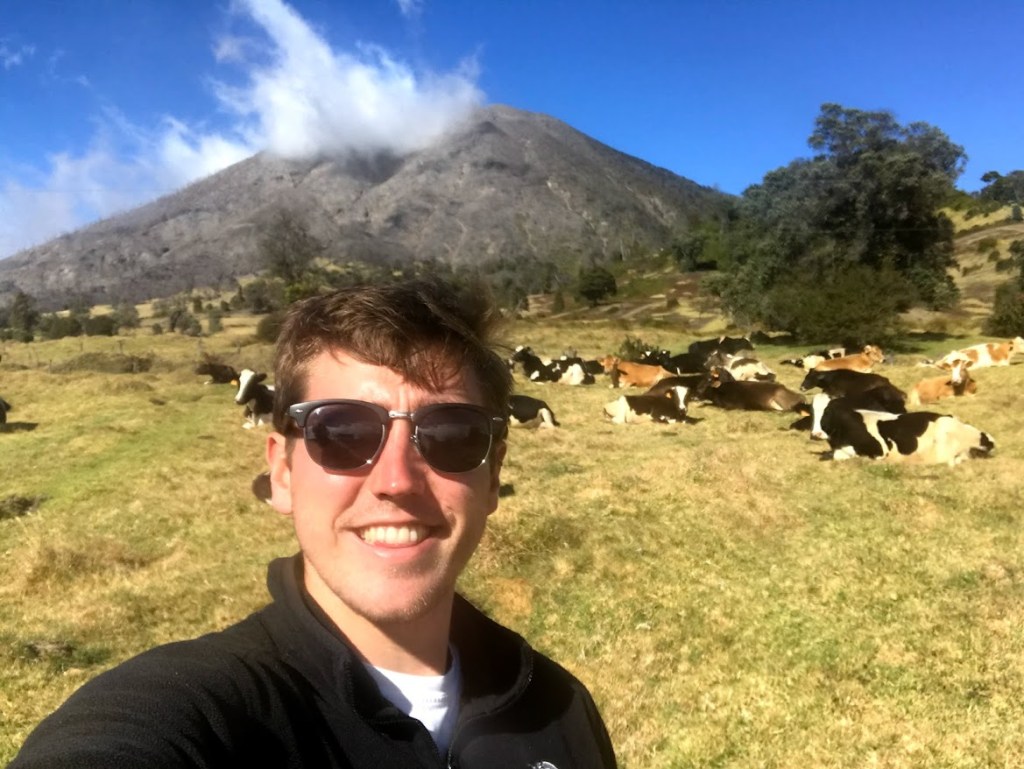
Costa Rica can get cold!
While Costa Rica is often seen as a tropical paradise, and for good reason, visitors are surprised that some parts of the country can get “cold”.
I use the term “cold” loosely, as I’m from the U.K. But after living in Costa Rica for a while, anything under 20°C is considered cold to me.
Due to its varied topography, Costa Rica is home to a wide range of microclimates – localised climate zones that can differ significantly from the surrounding area.
In higher elevation regions, where altitudes exceed 3,000 meters, temperatures can even drop below freezing. In fact, the coldest temperature ever recorded in Costa Rica was -8.9°C at Cerro Chirripó, the country’s highest peak.
Whilst it’s unlikely you’ll ever experience such frigid temperatures on a trip to Costa Rica, there are popular destinations – Monteverde, San Gerardo de Dota, and Poás, to name a few – that sit at high elevations and can get surprisingly chilly, especially at night, when temperatures can dip as low as 10°C.
If your itinerary includes any of these mountainous regions, be sure to pack a few warm layers. And if you’re unsure what to bring, our travel experts are always here to help you plan and pack with confidence.
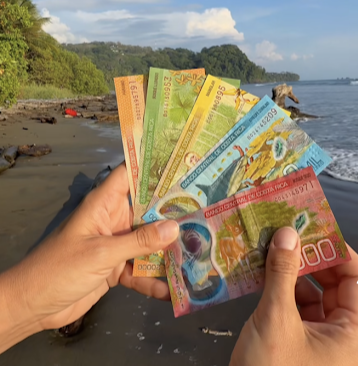
Costa Rican currency is colones, but US dollars are readily accepted
Don’t worry about that last minute scramble to the Post Office to order in Costa Rican Colones (CRC).
One of Costa Rica’s main forms of currency is the U.S dollar (USD) – a much more readily available currency in most U.K money exchanges.
Throughout Costa Rica, most places quote in USD – from hotels and tour companies to restaurants. If you see somewhere that quotes in local CRC, ask first if they accept USD.
Debit and credit cards are now widely used across much of the country. However, the more rural you go, the less reliable the use of a card will be, so we always encouraged to take cash.
If you do pay with USD, you may receive your change in CRC. For Ticos, the two currencies are used interchangeably. You can also be quoted in USD but pay in colones.
Currently the exchange rate stands at 684 Costa Rica Colon for 1 Pound Sterling. Or, 507 CRC to 1 USD.
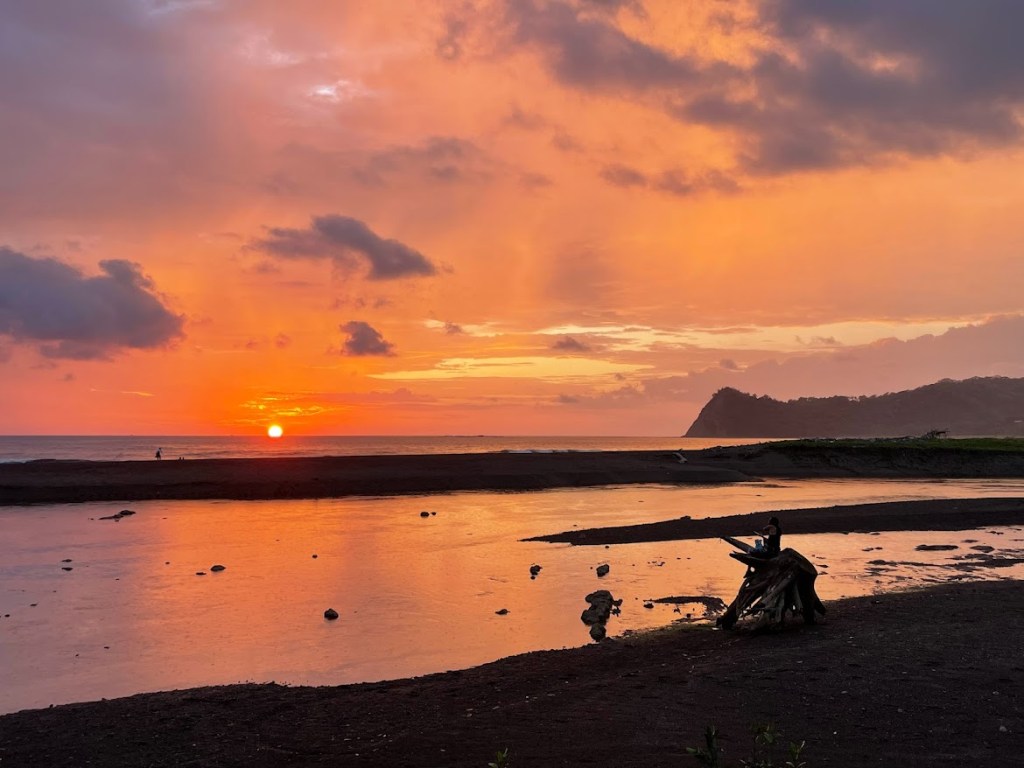
The rainy season is a great time to visit Costa Rica
We Brits love the sunshine. Especially on holidays.
If you’re after the sun, then a trip to Costa Rica during the Dry Season (Dec – April) has the best weather – with sunny days and high temperatures.
However, this is also the busiest time in Costa Rica.
Between the months of May – November, Costa Rica has so much to offer.
Don’t let the term “Rainy Season” put you off.
For us at Cecropia Travel, the rainy season is one of our favourite times to be in Costa Rica.
Not only is there an explosion of life – from courting frogs to migrating whales – but there are way fewer crowds for you to actually enjoy the scenery. Prices are often cheaper during this time too.
Besides, the rainy season doesn’t always mean rain.
Sure, you might get an hour or so in the evening, but the rest of the day may be glorious sunshine – like right now, as I write this.
Maybe this will be a good time to take a break and have a cheeky swim in the sea…
Sloths are pretty hard to see in the wild
Costa Rica has fully embraced the charm of the sloth – you’ll see them featured just about everywhere, from cuddly toys and souvenirs to hotel names and restaurant logos.
They’ve become a symbol of the country’s laid-back vibe.
But despite the popularity, sloths aren’t as easy to spot in the wild as you might expect. In fact, without a guide, catching a glimpse of one can be surprisingly difficult.
There are two species of sloth in Costa Rica: the two-toed and the three-toed.
Both prefer undisturbed primary rainforest, which means you won’t find them near any beaches of Guanacaste.
If you’re hoping to see one in its natural habitat, some of the best places include Manuel Antonio, the Osa Peninsula, La Fortuna, Tortuguero, Puerto Viejo, Monteverde, and Bijagua. Here, lush, year-round rainforests provide a continuous food supply for these slow-moving mammals.
Thanks to their incredible camouflage, sloths are masters at hiding in plain sight. That’s why we always recommend exploring with a knowledgeable guide – especially if you’re doing a night tour. Our expert guides know exactly where to look to help you make the most of your wildlife experience.

Police can stop and ask for your papers at any time
It’s not as scary as it sounds, but yes, police are allowed to legally stop anyone in Costa Rica – whether in a car, boat or other transportation.
Whilst travelling around Costa Rica, ensure you have your passport on you at all times. If you are doing day trips and would rather leave your passport in the hotel safe, a colour photocopy will suffice.
If the police stop you, they’ll normally ask you for your passport, ask you where you’re going and then send you on your way. This happened to me whilst travelling to Tortuguero via boat.
In Costa Rica, there are no on-the-spot fines. If a police officer has stopped you and is asking for money, it’s not a legitimate request and is actually illegal. Stay calm, ask for the officer’s badge and take a picture of it and report the incident to a police station or embassy.
Driving in Costa Rica can be a bit crazy!
Driving in Costa Rica tends to catch visitors off guard – it can be a bit of an expereince.
From a local’s perspective (and confirmed by our resident Tico), the road infrastructure isn’t exactly the best, which often leads to a bit of chaos on the streets. For us Brits, used to orderly queues and predictable driving behaviour, the lack of structure can feel… well, slightly alarming.
Don’t be surprised if you see drivers cutting in without warning, not using indicators, speeding, or using the horn in excess. Stay calm, this is the norm.
The good news? If you book with Cecropia Travel, you won’t have to deal with any of that. You’ll have a dedicated driver throughout your trip, so you can relax, soak in the scenery, and let someone else handle the unpredictable traffic.
That said, it’s still worth knowing what to expect. Driving can be particularly hectic in the cities, where things are fast-paced and often chaotic.
Once you get out into the countryside, though, it’s back to “Pura Vida” vibes. Just keep an eye out – dogs, chickens, cows, and the occasional sloth all seem to think the road belongs to them too.
San Jose, the Capital of Costa Rica, is not that bad
San Jose has gained a reputation as not being the nicest of Capital Cities.
And for the most part, well, it’s not.
Afterall, for a country that is blessed with nearly 5% of all biodiversity on Earth, why would you want to stay in a crowded city?
However, San Jose isn’t all bad. There are some hidden gems here – from cultural treasures, such as the National Theater and Museum of Costa Rica, to food tours, where you can experience locally-made produce.
What’s more, San Jose is ideally located for those who want a base for the duration of their time in Costa Rica. Many key tourist destinations are located within a couple of hours drive from the city.
Need some inspiration? Check out our Best Day Trips From San Jose.
English is widely spoken but not all Costa Ricans speak English
It’s a common assumption that because Costa Rica is such a popular tourist destination, everyone speaks English.
But that’s not always the case.
In well-known tourist areas, like Arenal or Monteverde, you’ll find that most locals – especially those working in tourism – speak English quite well, often fluently, often better than me.
However, it’s a mistake to assume that all Costa Ricans, even those with higher education, are fluent in English. For example, I recently had a hospital visit in the city and the doctor didn’t speak English.
The further you travel off the beaten path, the less likely you are to find English-speaking locals.
That’s why it’s always a good idea to learn a few basic Spanish phrases before your trip. Even just knowing how to say “hello,” “please,” and “thank you” can go a long way – and it shows respect for the culture.
Need help getting started? Check out our Guide To Tico Spanish for simple, helpful phrases that can make your travels smoother and more enjoyable.
It gets dark by 6 PM. Everyday.
Being a near-equatorial country, sunset time rarely changes throughout the year – give or take 30 minutes maybe?
By 6pm everyday, it’s dark. Many shops shut just before, and restaurants/bars will close no later than 9/10pm – especially at hotels.
Fortunately, the temperature still remains in the 20s (depending where you are).
Many Ticos follow daylight hours – rising early with the sun, and going to bed early. And you most likely will too, afterall, it’s hard to sleep when you have the howler monkeys and macaws as an alarm clock at 5am.
It’s advisable not to travel after dark, especially on your own.
Be careful of petty theft
Costa Rica is a peaceful country, and one of the safest countries in Latin America for traveling, especially for families and solo travellers.
However, it’s not perfect.
The most common crime in Costa Rica is theft: car/house break ins and pickpockets. Y’know, the opportunistic kind that happens worldwide.
To prevent this, you must always use your common sense and have a heightened sense of awareness – keep belongings nearby, don’t leave anything unattended, don’t bring fancy jewellery or designer clothes. Don’t go outside at night on your own.
Many hotels will have a safe within the rooms. It is recommended for you to store your valuables in them – they’re there for a reason.
No, you can’t hold a sloth
We saved the most important point until last.
Fuelled by social media, wildlife encounters have skyrocketed in popularity. Everyone wants to take a picture with a monkey or the chance to hold a sloth.
But behind those picture-perfect moments, there’s a darker reality.
Many places offering close-up animal interactions are far from ethical – and often have little regard for animal welfare.
Today, the Costa Rican government has made it illegal for establishments to allow tourists to hold or pose with wild animals in unnatural ways.
By launching the #StopAnimalSelfies campaign, the initiative aims to raise awareness about the negative impact these staged photos have on wildlife, and to reduce the demand for animals being removed from their natural habitats to be used as tourist props.
The campaign was partly inspired by disturbing incidents – like tourists attempting to ride sea turtles as they came ashore to nest. Yes, really.
While photographing animals in their natural environment is encouraged, the goal is always to respect their space and support conservation.
Besides, seeing a sloth munching on wild Cecropia leaves or a monkey swinging freely through the jungle is so much more rewarding than any staged photo op.
Check out our Ethical Travel In Costa Rica article.

Final Thoughts
It’s important to know a thing or two about the country you’re travelling to.
Afterall, it’ll help you be somewhat prepared for the unexpected.
When I first arrived in Costa Rica, back in 2018, there were quite a few shocks in store – from prices to journey times.
This guide will help you understand what to expect before travelling to Costa Rica. It will help set expectations, help with planning and make you aware of certain aspects.
But if there’s one biggest take-out message – please no selfies with wild animals and respect all natural spaces.
 Cecropia Travel Blogs
Leave a comment