
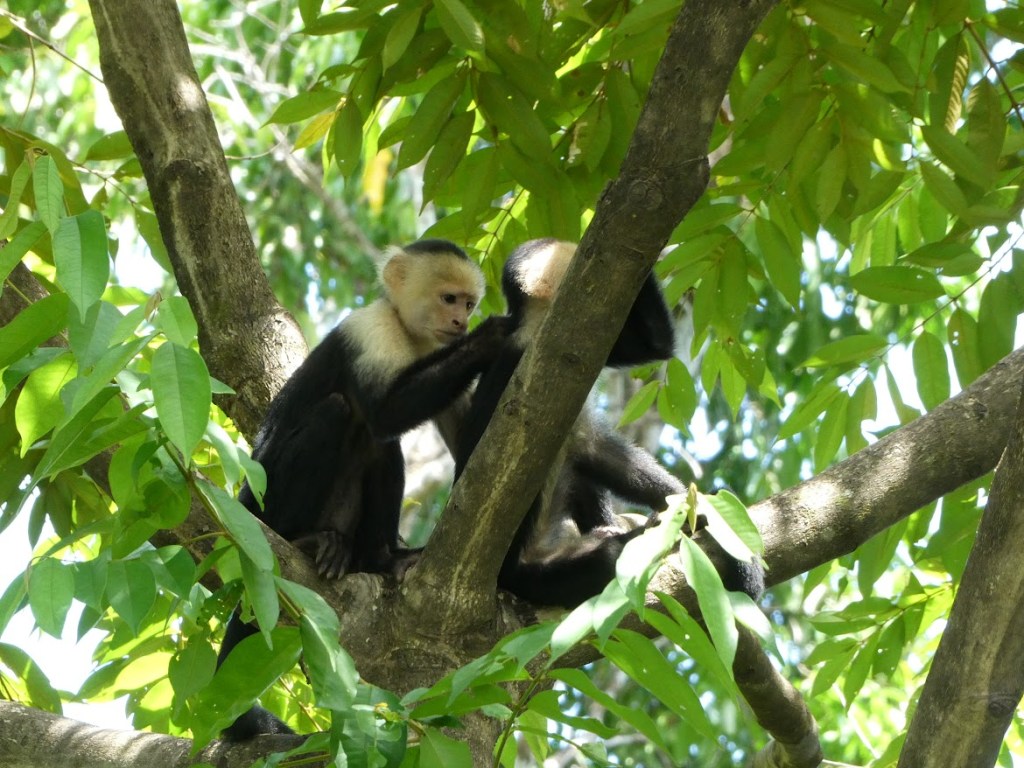
In the first post of this three-part series, we took a look at the four different species of monkeys in Costa Rica.
To jog our memory, there’s the capuchin, howler, spider and squirrel monkey.
In some regions of Costa Rica, such as the Osa Peninsula, all four species coexist together.
However, this is becoming rarer and rarer.
Today, monkeys of Costa Rica face a plethora of threats. From habitat loss to electrocutions.
And that’s exactly what this blog post will be exploring: the threats facing monkeys in Costa Rica.
But it’s not all doom and gloom. We’ll also be looking at some of the initiatives in place to help safeguard monkey populations across Costa Rica.
Threats to Monkeys
1. Habitat Loss
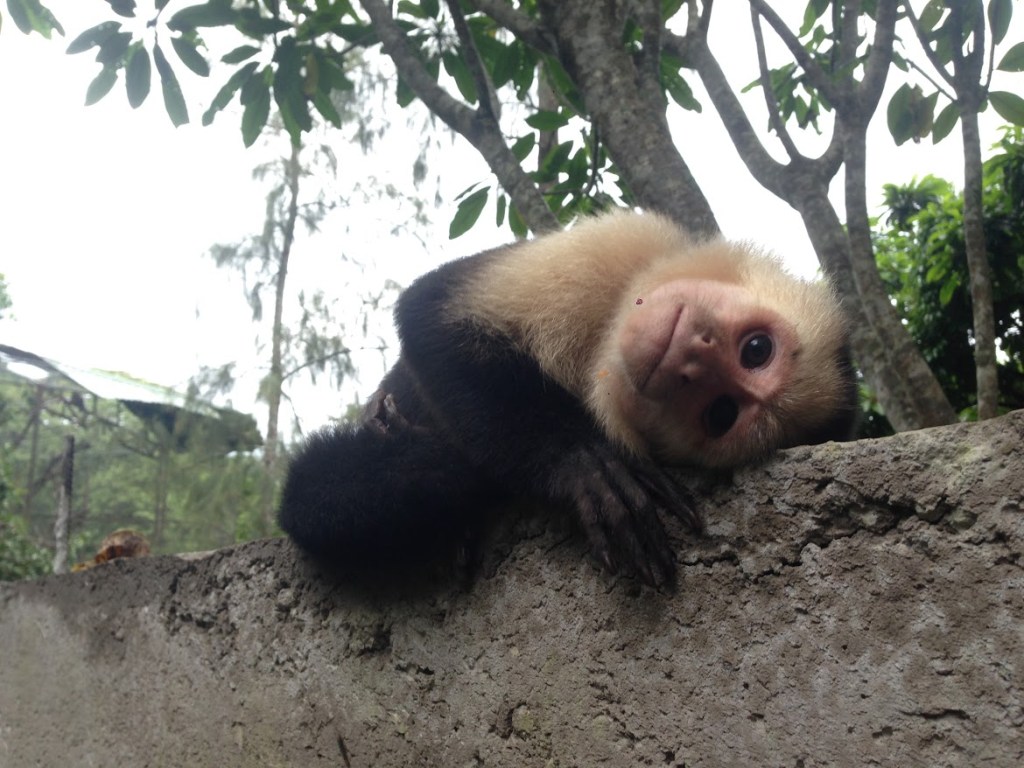
Habitat loss is one of the biggest threats facing wildlife today.
But what does it really mean? And how bad is it?
Today, Costa Rica prides itself on being one of the greenest countries in the world. And with over 30% of terrestrial land designated as National Parks and reserves, Costa Rica is leading the way in conservation.
However, it wasn’t always like this.
In the early 1940’s, over 70% of the country was forested. Fast forward to the 1980’s, and just 30% of forests remained.
And who’s to blame? Humans, of course.
Agriculture was, and still is, a leading cause of deforestation globally.
In Costa Rica, forests were cleared to make way for cattle grazing and to keep up with the huge demand of exotic products in the western world – I’m taking the likes of banana, pineapple and coffee.
Today, urban development is once again threatening forests.
The recent COVID pandemic has seen a huge increase of immigration to Costa Rica – especially from developed nations such as the U.S, Canada and Europe.
To accommodate this influx of people, vast swathes of forests are being cleared to make way for housing developments and teakwood plantations.
Animals, especially monkeys, need large areas of jungles to go about their life.
With sprawling cities and rivers of tarmac cutting off routes to historic feeding or mating grounds, many animals perish.
There are also secondary implications of habitat loss.
Higher risk of road traffic collisions. Increased rate of predation and hunting, especially from domestic species such as dogs. Novel diseases become prevalent. Increased fire risk.
This list goes on.
In Costa Rica, some species of monkey are more adaptable than others. Capuchins, for example, can live within human-modified environments.
Other monkeys, such as squirrel and spider monkeys, are not so fortunate. They need large areas of undisturbed primary rainforest, away from the forest edge.
2. Electrocutions
No, not the electric chair.
This is something way more scary.
Electrocutions go hand in hand with habitat loss. Down come trees, up go power lines.
Picture the scene:
You’re a monkey, foraging the trees for ripe fruit. Suddenly, the tree line abruptly comes to an end. In front, a busy strip of tarmac, adorned with whizzing metallic boxes, blocks your path.
On the other side of this strange sight, a tree bustling with juicy fruits shines like a beacon. The only way across is a long line of metallic vine.
Except, it’s not a vine. It’s a power line, carrying 380 kV of electricity. But too late, you’ve already reached out and grabbed the parallel wires, connecting the circuit.
A sudden surge of electricity races through your body.
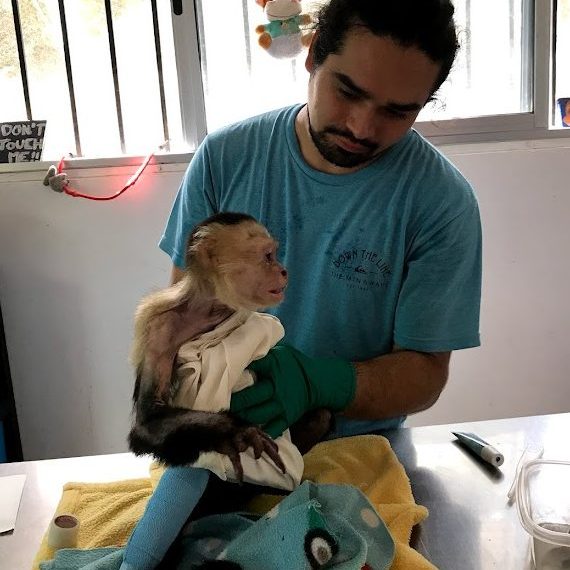
Either, you’re killed instantly or you’re flung to the ground, with life threatening burns and broken bones. Your young baby, attached to you at the chest, also suffers from life-changing burns.
I have seen first-hand the deadly effects of power lines on a range of animals. Dead howler monkeys swaying in the breeze, sloths with half a face burnt off. The sights are gruesome, but they should be a wake up call to the Costa Rican government.
Although Costa Rica is far from perfect, attempts have been put in place to reduce the impacts of wildlife electrocutions – however, most of these efforts have been enforced by local charities, and not the government!
3. Exotic Pet Trade
Despite being banned in 2024, it is estimated that there are over 5,000 primates kept as pets in the U.K.
These include both capuchin and squirrel monkeys, among others.
But to set the record straight, MONKEYS ARE NOT PETS.
It’s not cute. It’s not fashionable. It’s abuse.
Fuelled by social media videos of baby monkeys in diapers, many people have felt the need to get a bit of the action and purchase a monkey for themselves.
Whilst the intention may seem good, the reality is far from it.
To obtain a baby monkey, first the mother has to be disposed of.
The easiest way to do this is to kill the mother with the baby still attached.
But, as monkeys are often found in groups, called troops, many more may be killed in order to get to the baby.
The newly orphaned babies are transported all over the world in small holdings. Many do not survive the journey.
Those that do survive face a life of solitary confinement and health-related problems due to bad diet, lack of space and poor enrichment.
Monkeys are social primates, like us humans.
They need a range of stimulation and interaction with peers.
Like us, they learn behaviours from mentors. They watch adults foraging, learning what foods are safe to eat. They listen to alarm calls, knowing when to be alert and cautious.
It’s like preschool for monkeys. Each lesson contributes to brain growth and development.
A monkey that is hand-fed bananas all day long will develop sugar-related diseases, such as obesity, heart disease and diabetes. They also lack mental stimulation, as they’re not using their brain to work out how to obtain food.
But, monkeys aren’t kept just as pets. Historically, monkeys such as capuchins have been exploited by the film and tv industry. Can you think of any films and tv that use live capuchins? There are quite a few.
What Is Being Done To Protect Monkeys In Costa Rica?
Habitat loss is the leading decline of biodiversity worldwide.
In Costa Rica, it was no different. By the 1990s, Costa Rica had the world’s highest global deforestation rates.
Something had to be done.
Reforestation efforts are being made in Costa Rica to recondition its biodiversity and ecosystems that were affected by heavy deforestation in the 1900’s.
The Costa Rican government introduced two measures to protect their last remaining wild spaces.
Firstly, the government made it illegal to clear forest without permission.
Secondly, the government introduced payments for ecological services (PES) which provided an economic incentive to conserve and restore forests. This scheme gives money to owners of lands for forest protection, reforestation and sustainable landscaping.
It has been so successful that, in 2021, Costa Rica was the recipient of the first ever Earthshot Prize – an environmental award introduced by Prince William.
However, it’s not just efforts from the government that are safeguarding wildlife populations in Costa Rica.
Many hotels, including ones we at Cecropia Travel have partnered with, carry out tree planting activities. Here, guests can actively participate in the regeneration of local forests.
These initiatives have been so successful in some places, they are no longer needed.
NGO’s (Non-Governmental Organisations) also operate throughout the country to tackle threats facing monkeys.
Somos Congos is one such charity. They carry out a lot of research on howler monkeys, and how to protect them. Much of their work centres around power cable insulation, installation of wildlife bridges and community education.
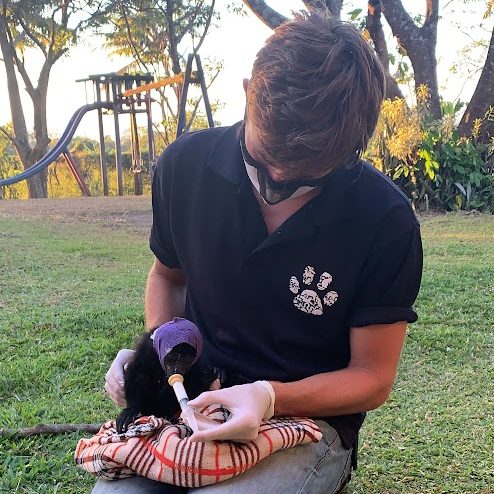
Rescue centres also play a vital role in monkey rehabilitation. If an injured monkey is found, organisations such as Rescue Centre Costa Rica or International Animal Rescue, dedicate their resources to rehabilitating and releasing them back to the wild.
Final Thoughts
Seeing monkeys on a trip to Costa Rica should be a highlight for anyone.
They are playful, inquisitive and amusing to watch.
But with the onslaught of threats facing the monkeys in Costa Rica, their populations remain uncertain.
Thankfully, with the help of the Costa Rican government, and countless NGO’s, strategies and mitigation efforts are in place to safeguard all four monkey species for generations to come.
 Cecropia Travel Blogs
Leave a comment