
Wildlife encounters are at the heart of what we do at Cecropia Travel.
And sea turtle releases are no exception.
Throughout Costa Rica, turtle nesting and hatching seasons vary by species and location. But if you’re planning a visit between May and November, you’re in prime time for a chance to take part in this magical experience.
Earlier this month, Cecropia Travel founder, Jack, visited a turtle project on the Pacific coast of Costa Rica.
This is the story of what he discovered – and how you can get involved too.
About Tortugas de Isla Damas
On the outskirts of Quepos, on the Pacific coast of Costa Rica, Tortugas de Isla Damas is a small community-led project that focuses on protecting the vulnerable olive ridley sea turtle.
One of five turtle species found in Costa Rica, olive ridleys have been under threat from poaching, bycatch and entanglements for decades.
In response,Tortugas de Isla Damas was founded by a local, Milo, who single handedly began preserving sea turtle eggs in the region. Ten years later, Milo continues to work on the same beach.
Whilst Milo carries out much of the work himself, he also relies on the help of volunteers and visitors. As a small charity, Milo depends on donations to keep Tortugas de Isla Damas in operation.
Their mission? Protect turtle nests and educate the public about the importance of marine conservation
Having worked with several turtle conservation groups in the past, I was eager to meet Milo and see the work happening at La Isla Damas for myself.
So that’s exactly what I did.
Getting to La Isla Damas
Strap yourself in for an authentic, off-the-beaten track adventure.
This isn’t your average turtle tour – and we mean that in the best way.
The journey begins with a speedy ferry ride across the Quepos estuary, which costs a mere 250 CRC (around 36p). Who said Costa Rica isn’t cheap…?
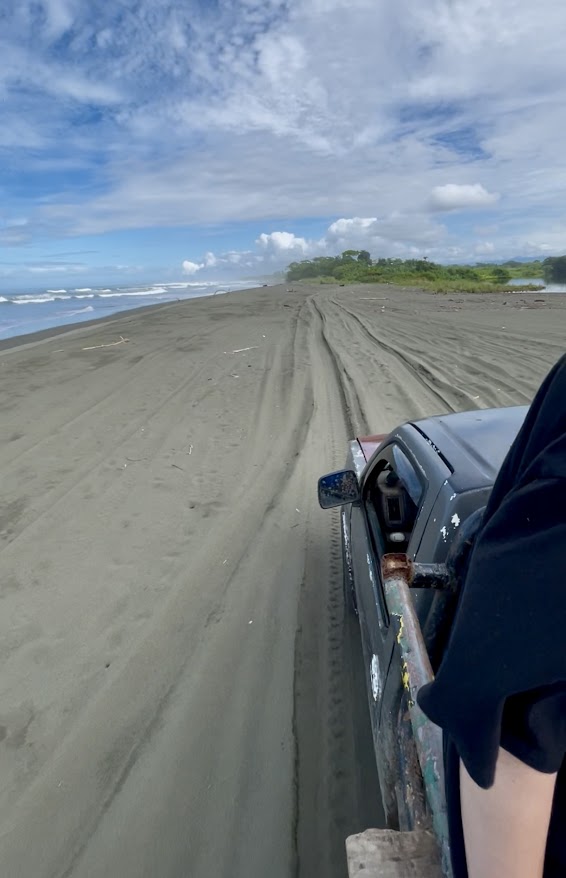
From there, you hop into a well-worn open-top truck, affectionately referred to as the “taxi,” for a 10 minute ride (if everything goes smoothly) through villages, lagoons, and lush coastal scenery.
On the return leg, our “taxi” decided it had had enough. So, an equally-decrepit looking truck came to the rescue, complete with frayed rope to tow us.
Yes, the truck is rustic. Yes, the ride is bumpy. But if you’re in it for the adventure, you’ll love every second.
If you are standing, or even perching on the truck edge, watch out for the flying leaves and branches – it’s like a game of dodgeball, trying to avoid the onslaught of obstacles.
Whilst there is basic accommodation on site, this is reserved for volunteers. Instead, we suggest staying in the nearby regions of either Quepos or Manuel Antonio – the team at Cecropia travel will be more than happy to help with any accommodation recommendations.
What to Expect: A Morning with the Turtles
If you’re expecting seamless transportation, paved roads and state-of-the-art facilities, maybe this adventure isn’t for you.
For nature lovers, however, Islas Damas is a conservation oasis
Hatchling releases often happen in the morning, between 8:00 – 9:00 am, when eggs of the previous night patrol have been collected and transferred into a protected hatchery.
The morning starts with an introductory talk from Milo himself.
Here, he explains all about the important work Tortugas de Isla Damas is doing. Milo doesn’t speak English, but an English-speaking guide will be alongside you if you book through Cecropia Travel.
Surprisingly, Milo told me that the project works, grudgingly, with local poachers.
Instant alarm bells rang in my mind, but Milo explained:
“By purchasing the eggs from hueveros [poachers], the team can control the trade. Each egg bought is a turtle saved”.
It sounded counterintuitive, but the method seemingly works: the number of olive-ridleys in the area has increased.
After the talk, Milo shows visitors the hatchery where eggs incubate safely before hatching.
Then, the release begins.
The Release: A Race for Survival
Olive-ridley turtles can lay up to 120 eggs in a single clutch. Of course, not all these eggs hatch – owing to predation, disease or climatic instability.
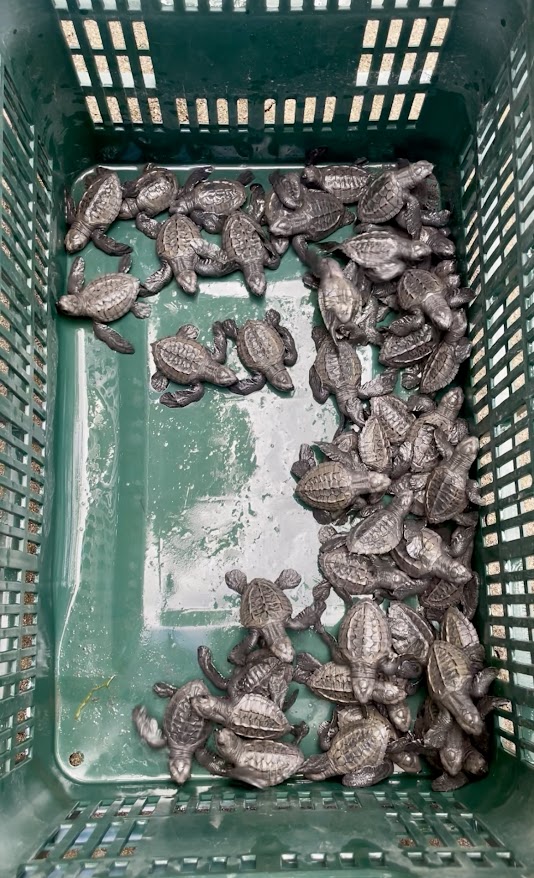
On the morning of my visit, 49 turtles had hatched out of their eggs the previous night.
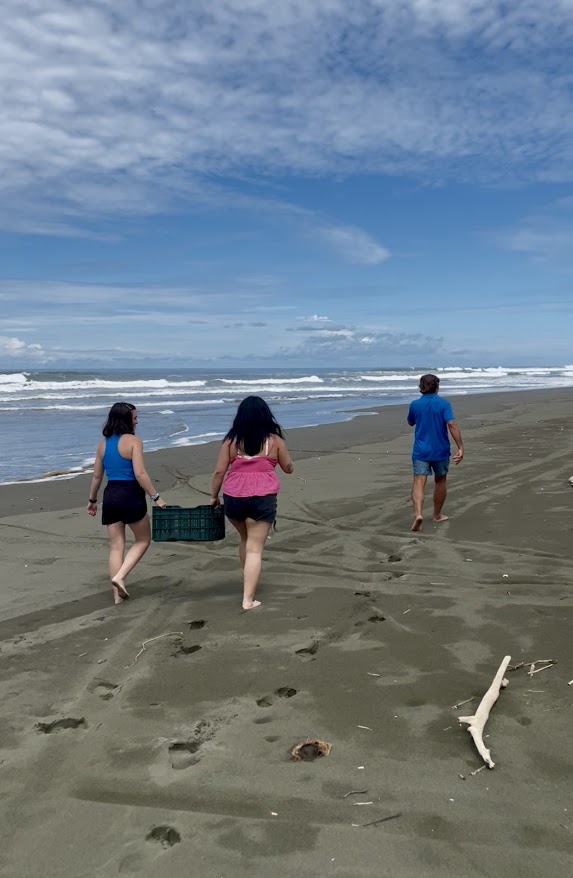
Volunteers led the release, ushering guests in lines close to the breaking waves.
The turtle hatchlings were released about 10 meters from the shore. This short journey helps strengthen their muscles, and gives them time to familiarise themselves with their nesting beach.
Scientists aren’t sure how or why, but female turtles always return to the same beach they were born to nest.
We were still and quiet, and there was an air of excitement among us.
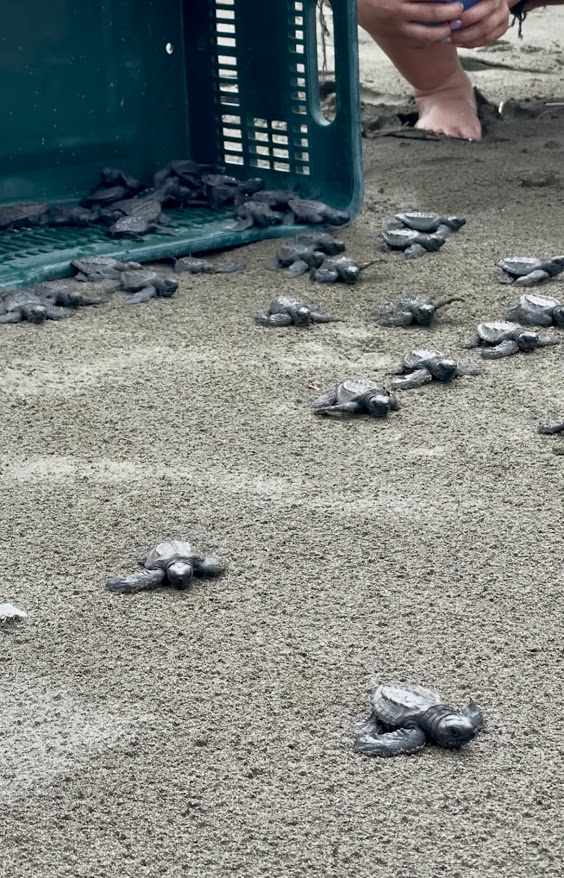
The box of hatchlings were gently tipped out onto the sand. A frenzied mass of flapping flippers erupted before my eyes.
Each baby turtle, mere hours old, were led by their own instinct towards the ocean as quickly as possible.
Left exposed on the beach is a dangerous position to be in. Turtle hatchlings are easy prey for a whole host of predators – from crabs to vultures. And despite their young age, each hatchling seemingly knew this. With a determined sprint, all 49 hatchlings made it to the relative safety of the crashing waves.
It really is such a special experience to partake in – there aren’t words to describe the event. Watching new life unfold before your eyes is a feeling. An emotion. All made possible from a dedicated few individuals that have devoted their lives to safeguard a species.
Why are Sea Turtles Important?
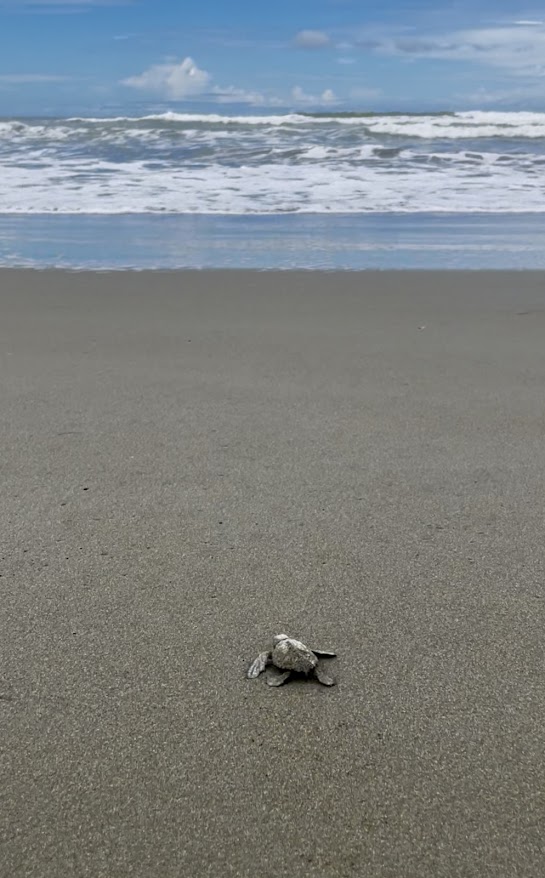
Each year in Costa Rica, baby sea turtles begin an extraordinary and challenging journey to the ocean.
From the moment they hatch, they face numerous dangers – from natural predators to human threats.
But why is it so important for us to conserve sea turtles?
Some say it’s our responsibility as humanity.
Afterall, humans have been overexploiting sea turtles for centuries. From meat and egg trade, to accidental bycatch from fish trawling, sea turtle populations have faced an onslaught of hurdles brought on by us humans.
Today, it’s thought that just 1 in 1000 baby sea turtles will make it to adulthood.
However, turtles are so much more than just a responsibility.
Sea turtles are keystone species – which essentially means they hold entire ecosystems together. Without them, entire ecosystems may collapse.
Sea turtles can control potentially harmful species, such as jellyfish, by predating on them. Some species also graze on seagrass or sponges, maintaining overall health.
Nesting females also promote healthy beaches. Decaying egg fragments or deceased hatchlings release nutrients back into the sand, allowing coastal vegetation to thrive.
The hatchlings themselves become food for a variety of predators – both oceanic and terrestrial.
And, from a human perspective, they provide income for coastal communities. Sustainable, regenerative tourism allows communities to profit off one individual within a species repeatedly, rather than on a one-off basis, such as what it would be if one was to consume a turtle for meat.
How You Can Help
At Cecropia Travel, our aim is to make conservation accessible for all.
We want to inspire a positive change within Costa Rican tourism, by allowing you to become involved with what makes this country so amazing.
By joining in with one of the educational turtle releases at Tortugas de Isla Damas, you will be directly supporting conservation in the region.
But there are other ways you can help:
- Volunteering: Take things one step further and join Milo on a night patrol. Witness nesting females, help collect eggs, and release hatchlings the next morning. It’s hands-on conservation; and an experience you’ll never forget.
- Donating: Contributions go directly toward resources for protecting turtle habitats and supporting volunteer efforts. Any donation is greatly appreciated.
- Spread the message: Conservation relies on word-of-mouth. By sharing your experiences with friends and family, you can inspire a positive change. Post photos. Share stories. The more people who hear about conservation work, the better funded and prepared these organisations can be to protect the animals we share our planet with.
Final Thoughts
Tortugas de Isla Damas continues to fight for sea turtles on Costa Rica’s Pacific coast.
And now, you can join in too.
Witness firsthand the incredible experience of releasing hatchling sea turtles back into the ocean.
Tourist engagement and relationships with locals are paramount to the conservation success of sea turtles.
Through ecotourism, we are inspiring change and witnessing communities take pride in conservation.
If you would like to know more, contact our team today at info@cecropiatravel.com or visit our website to start your own Costa Rican adventure.
 Cecropia Travel Blogs
Leave a comment